A beautiful outdoor kitchen can lose its appeal quickly when cabinet doors swell, finishes fade, or rust appears around handles and hinges. Weatherproof cabinetry is what separates a polished outdoor living space from an expensive installation that looks tired after a few seasons. It is not simply cabinetry placed outside. It is a system designed to withstand exposure while preserving the clean lines, storage performance, and architectural presence that make an outdoor kitchen worth investing in.
For homeowners, designers, and hospitality buyers, that distinction matters. Your kitchen may sit beside a pool, on an exposed rooftop, under a covered terrace, or against a coastal shoreline. Each setting places different demands on every panel, frame, fastener, and finish.
What Weatherproof Cabinetry Really Means
Weatherproof does not mean indestructible or maintenance-free. It means the cabinetry has been engineered to perform reliably through the conditions it is intended to face: UV exposure, rain, humidity, changing temperatures, frost, wind-driven debris, and everyday outdoor use.
The strongest outdoor cabinetry protects against moisture in more than one way. Its primary material should not absorb water. Its finish should resist UV damage and staining. Its joints and seams should avoid creating places where water can sit unnoticed. Hardware must be selected for outdoor conditions, and the cabinet interior needs sensible ventilation and drainage where appropriate.
This is why ordinary indoor kitchen construction is a poor shortcut. Particleboard, MDF, and standard laminated panels can look excellent on day one, but they are vulnerable once moisture finds an exposed edge, a screw hole, or a failed seal. Even a covered patio can experience condensation, temperature shifts, and sideways rain.
A premium outdoor kitchen should be designed around the reality that weather eventually reaches every surface. The goal is not to hope it stays dry. The goal is to make exposure far less consequential.
Materials That Earn Their Place Outdoors
Material selection is the foundation of long-term performance, but no single material is automatically the right answer for every project. The best choice depends on climate, visual direction, maintenance expectations, and how exposed the kitchen will be.
Powder-Coated Aluminum
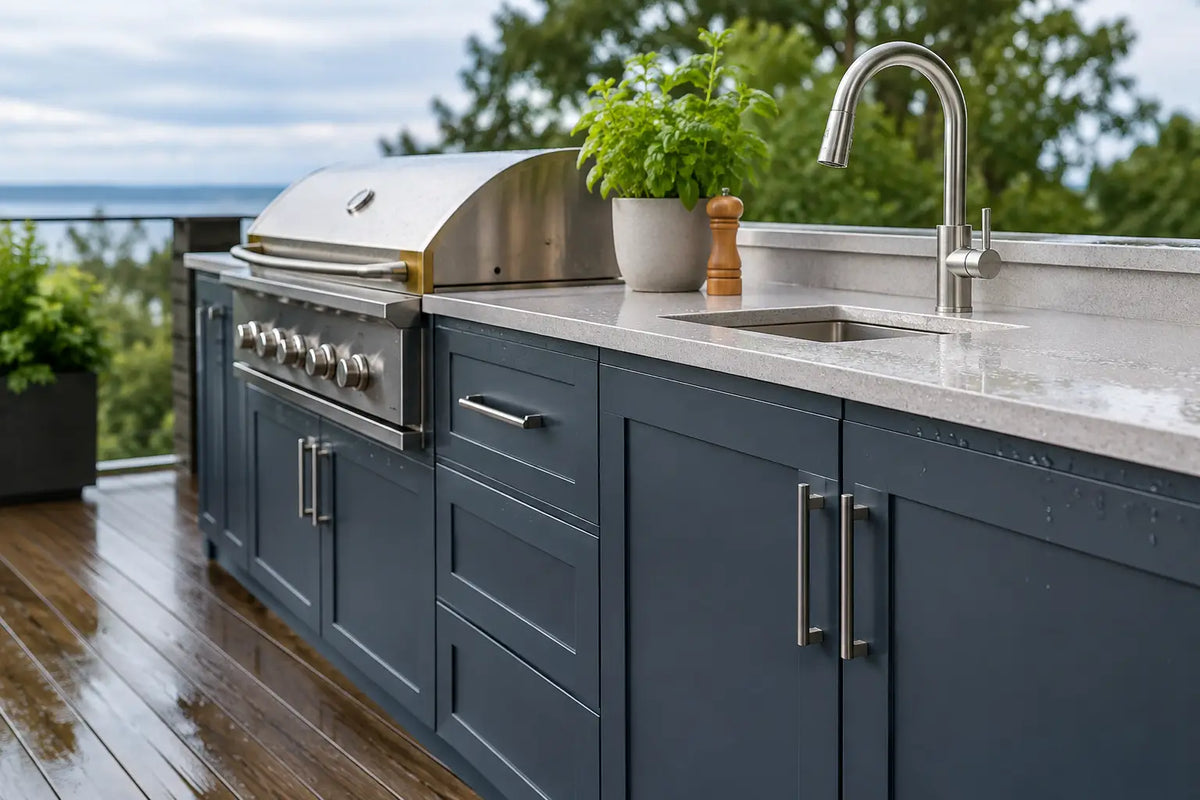
Aluminum is a leading choice for high-end outdoor kitchen structures because it is lightweight, stable, and naturally resistant to corrosion. When paired with a high-quality powder-coated finish, it can deliver a refined architectural look while standing up well to rain and humidity.
The quality of the coating matters as much as the aluminum beneath it. A properly prepared and finished surface resists fading, chalking, and surface wear far better than low-grade painted metal. This is especially valuable for dark cabinetry and sun-soaked terraces, where inferior finishes reveal their age quickly.
Aluminum also gives designers broad freedom with color and configuration. It supports the precise, minimal detailing that makes modular outdoor kitchens feel considered rather than improvised.
Stainless Steel
Stainless steel has an established place in outdoor cooking areas, particularly around grills, sinks, and food-preparation zones. It is hygienic, strong, and unmistakably professional. Yet stainless is not a single category of performance.
For coastal projects or areas exposed to salt air, marine-grade stainless steel is a more appropriate choice than basic stainless. Salt deposits can accelerate surface corrosion, even on materials commonly described as rust-resistant. Regular cleaning remains essential near the coast, where salt can settle into corners, hardware, and seams.
Stainless steel also has a distinct visual character. It suits contemporary, commercial-inspired spaces beautifully, but it may show fingerprints, water spots, and fine scratches more readily than a textured powder-coated surface.
Outdoor-Grade Panels and Countertop Surfaces
Panels used on cabinet fronts require more than an attractive texture. They need UV stability, moisture resistance, and a construction that will not delaminate when conditions become demanding. High-quality compact surfaces and purpose-built exterior panels can provide a sophisticated alternative to metal-forward cabinetry, particularly when a project calls for a warmer or more tactile palette.
Countertops deserve equal scrutiny. Heat resistance, stain resistance, and freeze-thaw behavior all matter. Natural stone can be beautiful, but it may require sealing and careful material selection in freeze-prone climates. Sintered surfaces and other engineered outdoor-rated options can offer exceptional durability, although edge detailing and proper support remain critical.
Construction Details That Protect the Investment
Premium weather performance is rarely visible in a showroom. It appears in the details that manage water, movement, heat, and airflow over years of use.
Cabinet bodies should be engineered with controlled drainage rather than flat horizontal surfaces that trap rainwater. Doors and drawers need consistent gaps that allow for expansion and contraction without rubbing or binding. Outdoor-rated hinges, drawer runners, handles, and leveling feet are not secondary details. They are the components used most often, and they are often the first to expose shortcuts.
Grill integration deserves particular attention. A powerful built-in grill produces substantial heat, and its installation requirements should shape the cabinet design around it. Proper clearances, ventilation, non-combustible zones where required, and accessible service points protect both performance and safety. A cabinet that looks tailored to a grill but ignores the manufacturer’s specifications is not a luxury solution.
Thoughtful modular construction also makes ownership easier. When utilities, appliances, and storage are organized within pre-engineered modules, installation becomes faster and more predictable. ELEEXA applies this approach to create pre-assembled outdoor kitchen systems that arrive ready for a more refined, lower-friction installation experience.
Choosing Weatherproof Cabinetry for Your Climate
Climate should influence your specification from the beginning, not after the design is approved. A kitchen that performs beautifully in a dry, mild region may require different material choices in a humid, coastal, desert, or northern environment.
In hot, sunny locations, prioritize UV-stable finishes and countertop materials that will not become excessively difficult to use under direct sunlight. Dark surfaces can be visually striking, but they absorb more heat. Shade structures and thoughtful orientation can improve comfort as much as any material choice.
In regions with heavy rain or humidity, drainage, airflow, and non-absorptive cabinet materials take priority. Avoid designs that create deep, unventilated voids where moisture can linger. In cold climates, verify that surfaces, plumbing provisions, and countertop materials are suitable for freeze-thaw conditions. Seasonal winterization may still be necessary for water lines and certain appliances, even with exceptional cabinetry.
For coastal homes and hospitality properties, specify corrosion-conscious materials throughout, not only on visible front panels. Fasteners, hinges, appliance surrounds, and adjustable feet all face the same salt-laden air.
Design Should Not Be Sacrificed for Durability
The old assumption that outdoor cabinetry must look industrial or utilitarian is no longer acceptable for premium properties. Weather resistance and visual sophistication should work together.
A well-designed kitchen can extend the architecture of the home through coordinated colors, clean reveals, balanced proportions, and integrated appliances. Modular cabinetry makes this easier to achieve without committing to a lengthy, contractor-dependent custom build. It also allows a kitchen to evolve, whether that means adding refrigeration, a pizza oven station, a sink module, or storage for the demands of larger gatherings.
The most successful outdoor kitchens feel intentional from every angle. Cabinetry should provide enough enclosed storage to keep the terrace calm, while leaving appliances accessible and the cooking zone practical. Beauty matters, but so does the simple pleasure of opening a drawer that still glides smoothly after a wet spring and a hot summer.
Care That Keeps Cabinetry Looking Exceptional
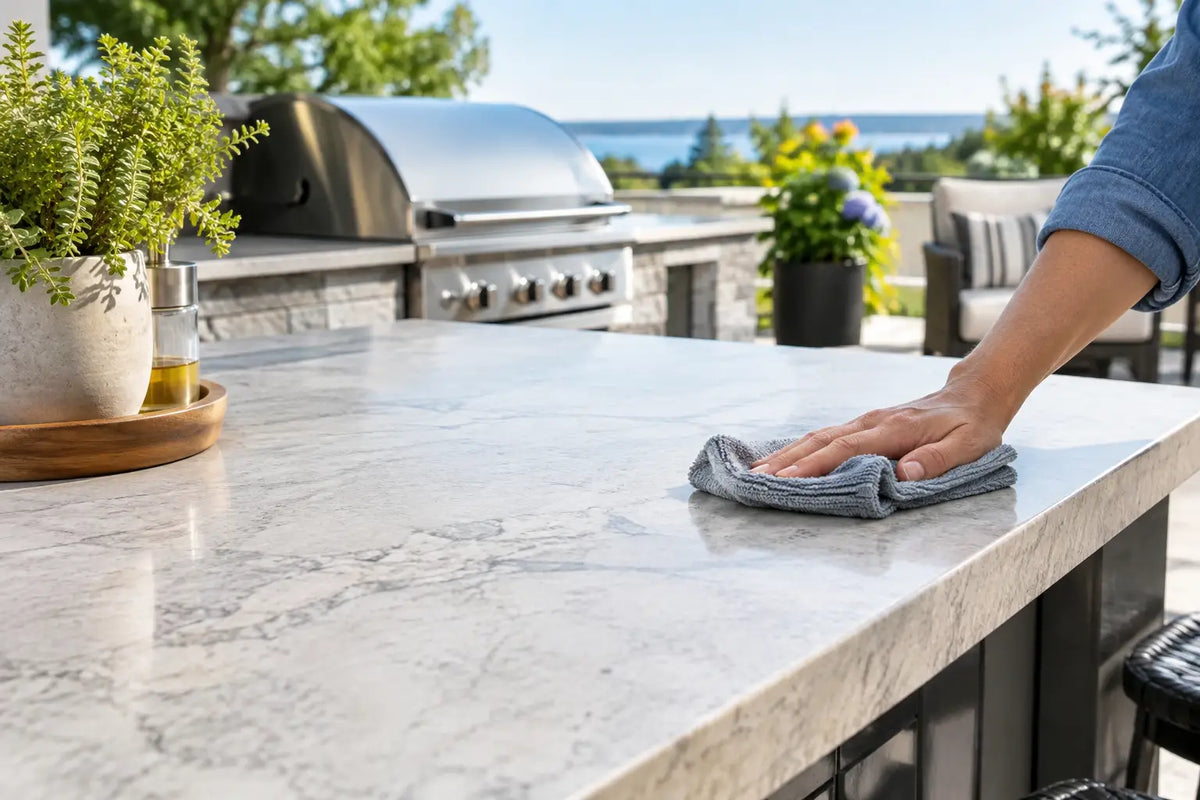
Even the best weatherproof cabinetry benefits from straightforward care. Wipe down exterior surfaces regularly with a soft cloth, mild soap, and clean water. Avoid abrasive pads, aggressive solvents, and harsh chlorine-based cleaners unless the material manufacturer specifically approves them.
After storms, remove standing water, leaves, and debris from countertop edges, cabinet bases, and appliance areas. Check door alignment and hardware periodically, particularly after significant temperature swings. Coastal installations deserve more frequent rinsing to remove salt residue before it has time to affect surfaces.
Protective covers can help shield grills and selected appliances when they are not in use, but cabinetry itself should not depend on a cover for survival. The cabinet system should be ready for real outdoor life, including the days when weather changes faster than plans.
The right outdoor kitchen does more than add a place to cook. It gives the entire property a more generous way to live. Choose cabinetry built for the climate, detailed for daily use, and finished with enough confidence to remain the focal point of the terrace long after the first summer gathering.