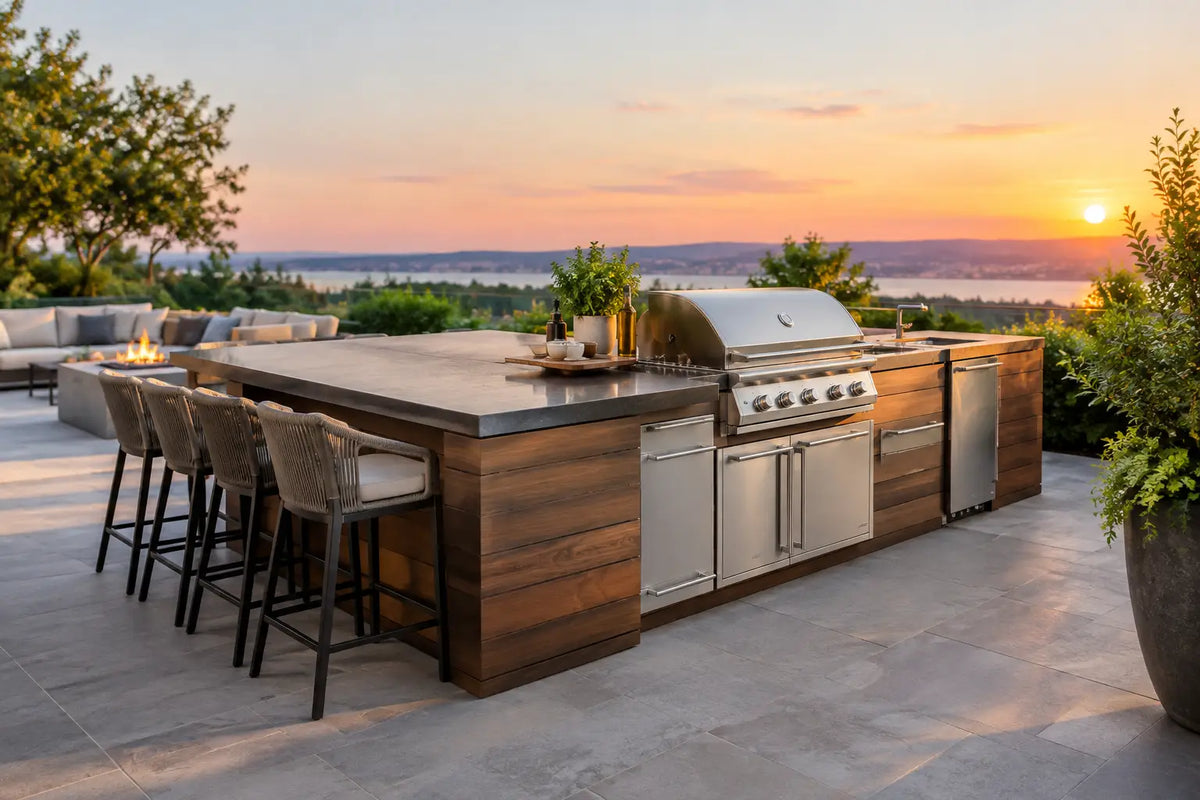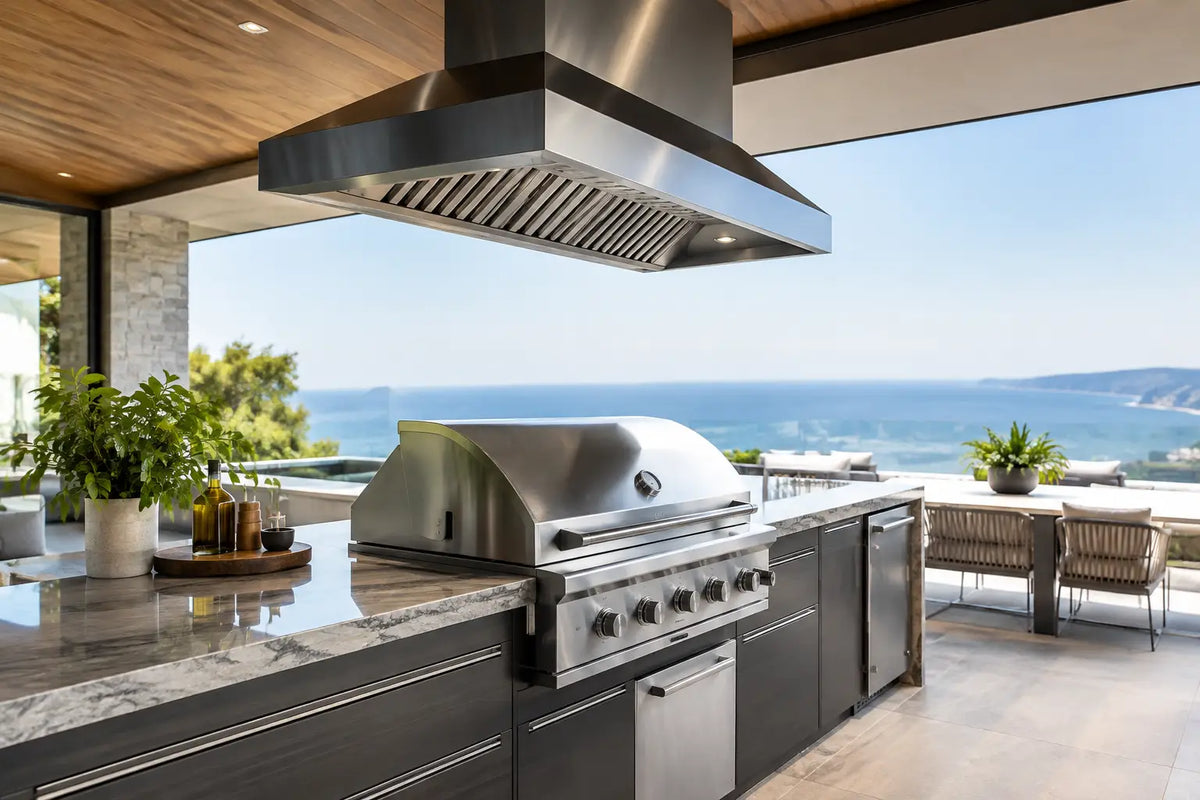
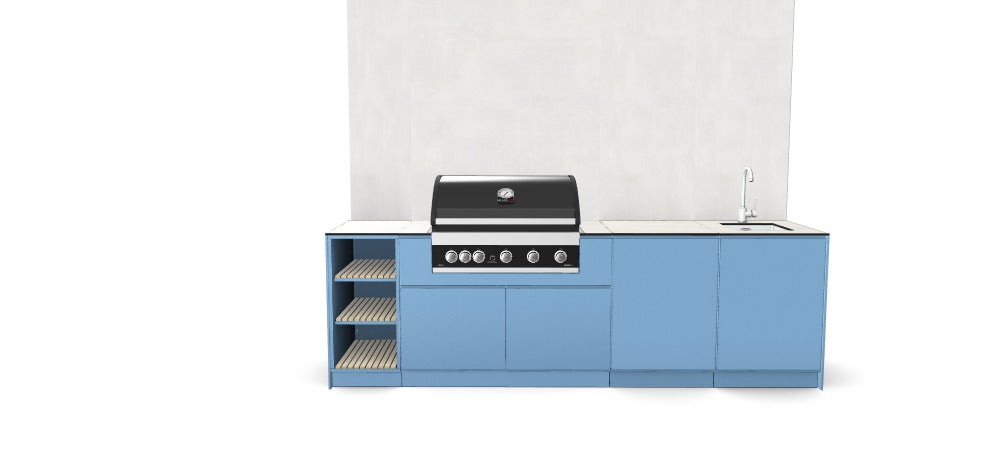

A rooftop kitchen should feel effortless when the grill is lit, guests arrive, and the city begins to glow. That ease is designed long before the first dinner service. Rooftop gas safety is the discipline behind a beautiful, dependable outdoor cooking space - one that protects people, respects the building, and performs with the confidence expected from a premium installation.
Gas is an excellent fuel for rooftop entertaining: immediate heat, precise control, and no bags of charcoal crossing an elevator lobby. Yet a roof is not simply a backyard at a higher elevation. Wind behaves differently, structural and fire requirements can be more demanding, and access for gas piping, servicing, and emergency response must be considered from the start. The best result pairs architectural restraint with a properly engineered gas plan.
Rooftop Gas Safety Starts Before You Choose a Grill
The most expensive mistakes are usually made at the planning stage. A grill may fit visually within a cabinet run but still be unsuitable for the available gas supply, the roof's wind exposure, or the required clearance to surrounding materials. Treat the appliance, fuel line, kitchen modules, screening, and roof assembly as one coordinated system.
Start by confirming what fuel source the property can legally and practically provide. Natural gas is often ideal for a permanent residential or hospitality rooftop kitchen because it eliminates cylinder handling and provides continuous fuel. It also requires a correctly sized, code-compliant supply line run by a qualified gas professional. The available pressure, total line length, number of fittings, and the combined BTU demand of every connected appliance all affect pipe sizing.
Liquid propane can be appropriate where a natural gas connection is not available, but rooftop storage rules are highly location- and building-specific. Some jurisdictions, building owners, insurers, or condominium associations limit cylinder size, quantity, location, or rooftop use entirely. Never assume that a propane arrangement accepted at ground level will be approved on a roof.
This is also the moment to establish responsibility. For a private residence, that may mean the homeowner, architect, installer, gas contractor, and local authority having jurisdiction. For a hotel, multifamily property, or rental development, facilities teams, fire consultants, insurers, and property managers may also need to sign off. Early coordination avoids a finished terrace waiting on an avoidable correction.
Design Clearances Into the Kitchen, Not Around It
A luxury outdoor kitchen should look intentional from every angle. It should not rely on last-minute gaps, improvised heat shields, or appliances pressed against decorative cladding. Every grill, burner, pizza oven, and side appliance has manufacturer-specific clearance, ventilation, and installation requirements. Those instructions are part of the design brief, not fine print to read after delivery.
Clearance requirements vary according to whether adjacent surfaces are combustible or noncombustible, whether the appliance is built in or freestanding, and whether a lid opens near an overhead feature. A stainless steel finish is not automatically a complete heat-management solution if combustible framing, insulation, membranes, or stored items sit behind it. The construction hidden inside an enclosure matters as much as its visible surface.
For built-in grills, use the manufacturer-approved cutout dimensions, ventilation provisions, and insulating liners where required. Do not reduce openings to create a tighter, more custom appearance. Gas appliances need airflow, and enclosures need a deliberate route for heat and any unburned gas to dissipate rather than collect.
Wind deserves equal attention. On exposed rooftops, gusts can affect burner performance, blow out flames, and push heat toward areas that would otherwise remain comfortably clear. Wind screens can improve comfort, but they must not block appliance ventilation or trap heat around the cooking equipment. The right solution depends on the grill model, rooftop orientation, parapet height, and local wind conditions. This is an area where a site-specific review is far more valuable than a generic rule of thumb.
The Gas System Must Be Accessible and Controllable
A gas line should be discreet, protected, and easy to isolate. It should never be so concealed that an owner or service technician cannot locate the shutoff valve quickly. Position a clearly labeled, accessible manual shutoff valve in accordance with applicable codes and appliance instructions, with a location that makes sense during normal use and in an emergency.
Where piping crosses or penetrates a roof assembly, the detail must preserve the waterproofing system. A gas connection is not permission to compromise a premium roof. Penetrations, sleeves, supports, and flashing should be coordinated with the roofing contractor and building team so water management, movement, and future maintenance are fully considered.
Flexible connectors are often used at the final appliance connection, but they are not a substitute for a correctly designed piping system. They must be approved for the application, protected from abrasion and heat, and installed without sharp bends or tension. Gas piping should not be routed where it can become a trip hazard, be struck by moving furniture, or disappear behind panels that cannot be removed for inspection.
For modular outdoor kitchens, service access is a major advantage when it is planned well. A refined, pre-assembled system can create a clean architectural finish while preserving practical access to the grill connection, shutoff, and key service points. The goal is simple: premium visual integration without turning routine maintenance into demolition.
Ventilation Is Non-Negotiable
Outdoor does not always mean adequately ventilated. Covered terraces, pergolas with dense louvers, recessed roof decks, high parapets, glass wind walls, and adjacent architectural screens can all alter how heat and gas disperse. If a cooking zone has an overhead structure or is partially enclosed, the project may require additional clearances, specific ventilation openings, or restrictions on which appliances can be used there.
Never install a standard outdoor gas grill in an enclosed space or convert a storage bay into a gas-appliance compartment. Do not use curtains, temporary covers, or furniture arrangements that obstruct vents. The risk is not merely poor grill performance. Accumulated gas can create a serious ignition hazard, while trapped combustion byproducts and heat can make an otherwise elegant roof terrace unsafe.
The same principle applies when the kitchen is not in use. Keep louvers, vents, and access areas clear of cushions, covers, cleaning supplies, and seasonal storage. A meticulously styled rooftop can still fail the basics if airflow is treated as invisible decoration.
Commission the Kitchen Like a Professional Asset
A qualified professional should install, pressure-test, and commission the gas connection before the kitchen is used. This is not the moment for a quick leak check with a flame. Proper testing follows applicable code, uses approved methods, and confirms that every connection, valve, regulator, and appliance is operating as intended.
Before hosting the first rooftop dinner, establish a simple operating routine:
- Confirm that the grill and nearby surfaces are clear of covers, paper products, and stored items.
- Inspect hoses, connectors, and visible piping for wear, damage, corrosion, or loose fittings.
- Open the gas supply as directed by the appliance manufacturer, then ignite burners using the correct sequence.
- If you smell gas, hear hissing, or experience repeated ignition failure, turn off the gas if it is safe to do so, leave the area, and contact a qualified professional or emergency service as appropriate.
Maintain the Details That Protect the Experience
Rooftop environments can be punishing. UV exposure, wind-driven rain, salt air near the coast, freeze-thaw cycles, and airborne debris all accelerate wear. Stainless steel remains an exceptional outdoor material, but it still benefits from cleaning and inspection. Grease accumulation is also a safety issue, particularly in burners, drip trays, and beneath the grill hood.
Schedule a seasonal inspection before the main entertaining period, and arrange a professional service visit according to appliance guidance and local requirements. Check ignition systems, burners, valves, regulators, vent openings, fasteners, and weather seals. If the kitchen uses propane, inspect cylinders, regulators, and hoses with particular care, and replace components at the first sign of damage rather than extending their life for one more season.
A fire extinguisher rated for the expected hazards should be placed where it is easy to reach without leaning across the grill. It should not be hidden inside the cooking cabinet or stored so close to the appliance that access is blocked by flame or heat. Depending on the property and local rules, additional fire protection may be required.
A Rooftop Kitchen Worth Trusting
The finest rooftop kitchens make engineering feel invisible. Their lines are clean, their materials are composed, and every appliance feels exactly where it belongs. But that sense of calm comes from decisions made with precision: compatible equipment, compliant fuel delivery, ventilation that remains unobstructed, and service access that survives years of real use.
Choose the grill and kitchen system for the roof you actually have, not the image that looks best in a catalog. With a qualified gas professional, the right approvals, and a design that treats safety as part of luxury, your rooftop becomes a setting for long evenings rather than a source of uncertainty.