A villa barbecue should never feel like an appliance placed against a wall. It should feel like a destination: a composed outdoor room where cooking, conversation, service, and architecture work together. This guide to villa barbecue design helps homeowners, architects, and hospitality teams create an outdoor cooking space with the visual authority and practical performance a premium property demands.
The strongest designs start before the grill is selected. A high-performance barbecue matters, but its position, surrounding workspace, storage, lighting, and relationship to the home determine whether the area becomes a favorite gathering place or an expensive feature used only a few times each season.
Begin With the Way the Villa Is Used
A villa barbecue design should be built around real hosting patterns, not a catalog layout. A primary residence used for weekly family dinners needs a different configuration from a vacation property that hosts twelve guests at a time. A boutique hotel terrace has another set of demands entirely: fast service, easy cleaning, dependable materials, and a layout that keeps guests comfortable while staff can work efficiently.
Start by considering the number of people typically served, how food will be prepared, and where guests naturally gather. If the barbecue is primarily for relaxed dinners of four to six people, a linear kitchen with generous prep space may be ideal. For larger events, include distinct zones for grilling, plating, drinks, and waste. The cook should not have to compete with guests for counter space or walk across the terrace carrying hot dishes.
The most refined outdoor kitchens create a clear rhythm. Heat and cooking sit in one zone. Preparation and serving occupy another. Refrigeration, storage, and beverage service are positioned where they support the evening without interrupting it. This is how a barbecue area begins to perform like a real kitchen rather than an isolated grill station.
Choose the Right Location Before the Layout
The best location is rarely simply the closest point to the back door. Proximity to the indoor kitchen is useful, especially for ingredients and cleanup, but the barbecue also needs room to breathe. Consider prevailing wind, sun exposure, views, guest circulation, and the sightline from inside the villa.
Place the cooking area where smoke is unlikely to drift toward open doors, dining tables, or neighboring properties. Avoid tight corners that trap heat and make the kitchen feel boxed in. At the same time, do not place the barbecue so far from the social areas that the cook becomes separated from the gathering.
A covered terrace can offer excellent comfort, but it requires careful planning for ventilation, clearance, and grill specifications. Open-air placement provides more freedom, though shade may still be necessary for midday cooking and long summer lunches. A pergola, canopy, or architectural overhang can define the kitchen visually, provided it does not compromise safe operation.
Design Around Sightlines
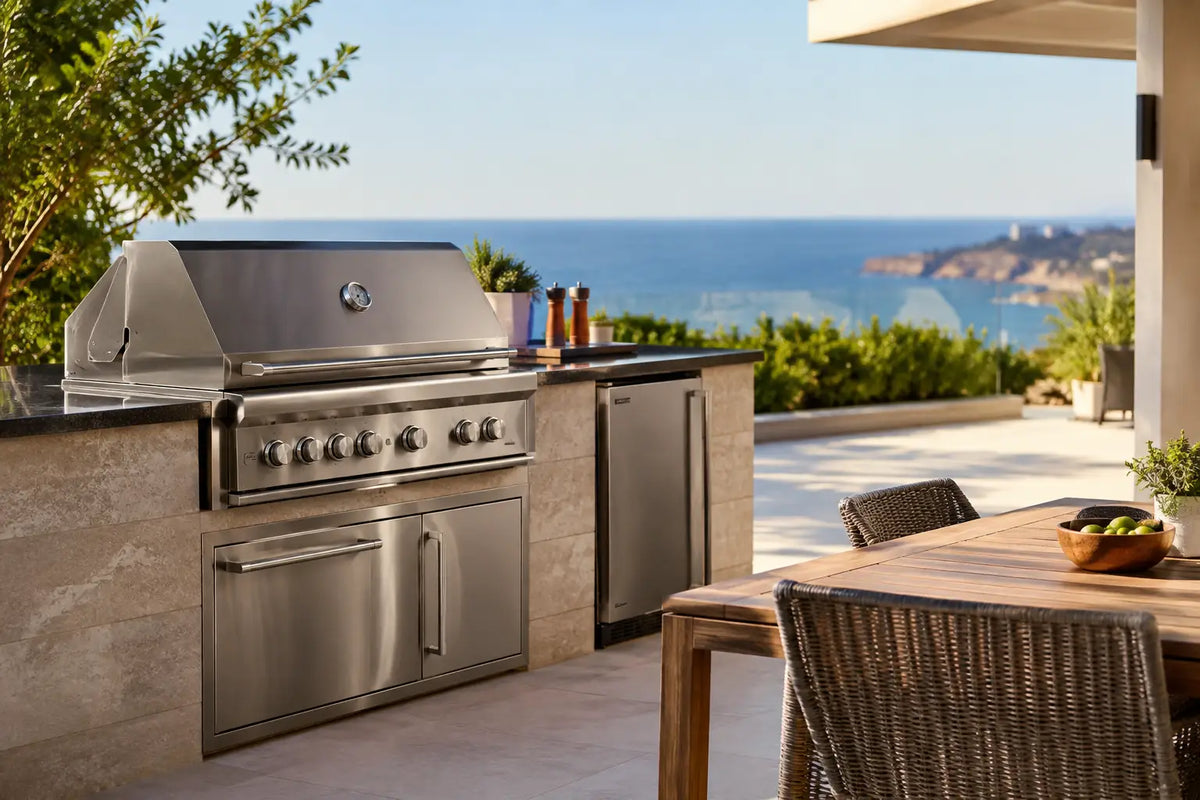
In a premium villa, the barbecue should contribute to the view even when it is not in use. Align cabinetry with major architectural lines, terrace edges, pool geometry, or garden axes. A kitchen facing a pool, coastline, or landscaped courtyard gives the cook a reason to remain engaged with guests.
If the outdoor kitchen is visible from the living room, treat it as part of the villa's interior design language. Cabinet finishes, countertop color, and hardware should complement the surrounding architecture rather than introduce a competing style. Dark architectural tones can create a dramatic contemporary statement, while warm textured finishes can soften stone, timber, and Mediterranean landscaping.
Build the Villa Barbecue Around Cooking Performance
The grill is the centerpiece, but it should be selected for the cooking style, fuel preference, and available utilities. Gas grills offer fast ignition, precise heat control, and convenient high-volume entertaining. Charcoal or ceramic grills bring distinctive flavor and versatility for slow cooking, baking, and smoking. Many luxury installations pair a primary gas grill with a secondary charcoal or ceramic cooker, giving the host range without compromise.
Compatibility matters. The barbecue opening, ventilation requirements, service access, and surrounding heat protection must be designed for the exact appliance model. A built-in grill cannot be treated as a generic rectangle. Each manufacturer has its own requirements, and ignoring them can lead to poor performance, difficult maintenance, or an unsafe installation.
Allow serious space on both sides of the grill. One side should support raw-food preparation, while the other should receive cooked food and platters. A narrow counter may look minimal in a rendering, but it becomes frustrating the moment several dishes are in motion. For an entertaining-focused villa, generous surfaces are not excess. They are what make hosting feel effortless.
Consider including refrigeration near the grill, especially if the indoor kitchen is more than a few steps away. Cold drinks, marinades, produce, and prepared ingredients remain within reach, reducing trips indoors. Storage drawers for tools, spices, serving pieces, and cleaning supplies keep the countertop composed and the experience more refined.
Specify Materials for Weather, Not Just First Impressions
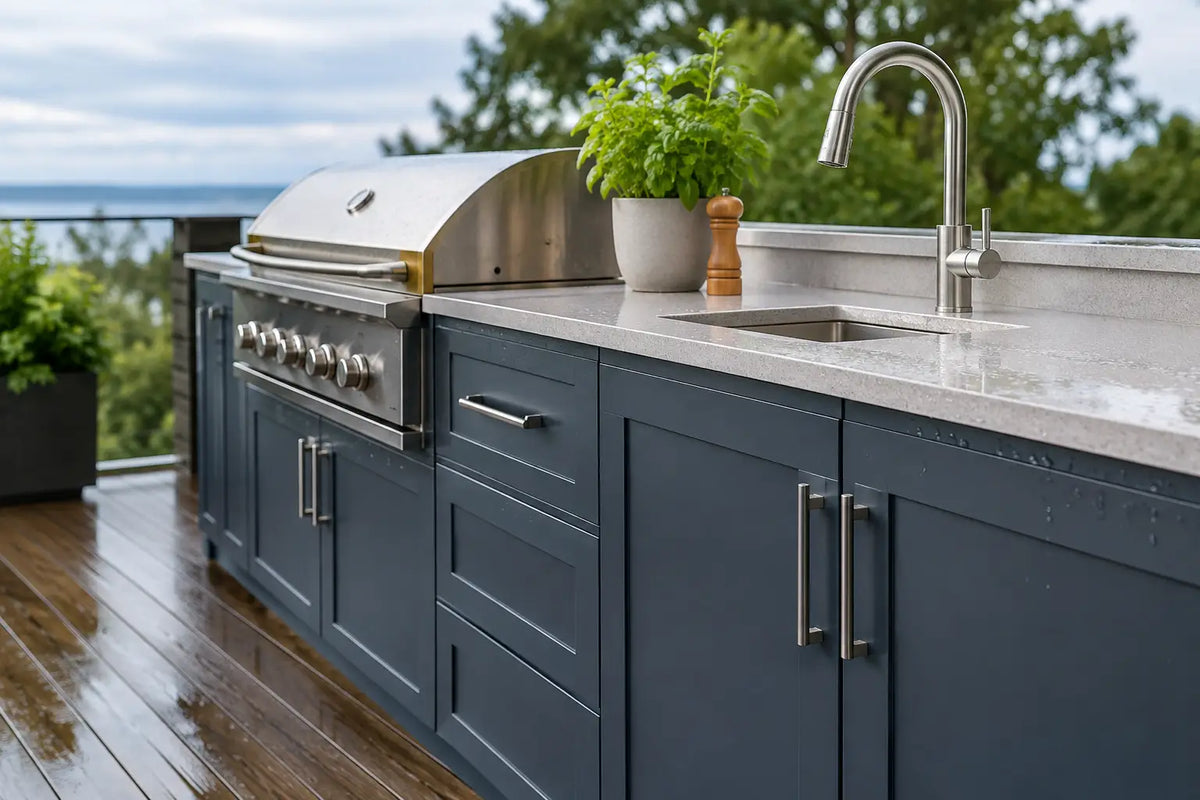
Outdoor kitchens live with UV exposure, rain, coastal air, temperature swings, grease, and frequent cleaning. Materials must look exceptional after years outdoors, not merely on installation day. Powder-coated aluminum, high-grade stainless steel, weather-resistant compact surfaces, and purpose-built outdoor cabinetry are proven choices when selected and detailed correctly.
Coastal properties deserve special attention. Salt in the air can accelerate corrosion, particularly on lower-grade metals, exposed fasteners, and poorly protected hardware. In these settings, specify corrosion-resistant components and establish a simple cleaning routine. A premium outdoor kitchen should be engineered for its climate, but every material benefits from intelligent care.
Countertops should balance beauty with real use. Light surfaces can feel crisp and expansive under strong sun but may show food stains more readily. Dark surfaces create visual depth and can connect beautifully with modern architecture, though they may become hot in direct sunlight. Texture is also a practical decision. Highly polished finishes can reveal fingerprints and glare, while a subtle matte surface is often more forgiving.
Plan Utilities Early
Utility planning is where many beautiful barbecue concepts lose momentum. Gas, electricity, water, drainage, refrigeration, lighting, and ignition systems all need to be coordinated before the terrace is finished. Retrofitting them later can create unnecessary disruption and visible compromises.
A gas line may offer the cleanest long-term experience for frequent grilling, while propane can suit properties where a fixed connection is impractical. Electrical capacity should account for refrigeration, task lighting, outlets, and any accessories. If the villa is a rental or hospitality property, accessible shutoffs and straightforward service access are particularly valuable.
Water is optional, but an outdoor sink changes how the space functions. It simplifies prep, handwashing, and cleanup, especially during long gatherings. If plumbing is difficult, do not force it at the expense of the overall design. A well-planned dry kitchen with substantial prep area and nearby indoor support can be more successful than an awkwardly compromised sink installation.
Light the Kitchen Like an Evening Destination
Most outdoor entertaining happens after the sun has softened, so lighting deserves the same attention as the grill. Task lighting should illuminate the cooking surface and countertop without casting harsh shadows. Ambient lighting can define the cabinetry, pathways, dining area, and adjacent landscape.
Layered lighting produces the most elegant result. Warm, indirect illumination creates atmosphere, while focused lighting makes cooking safe and precise. Avoid an overly bright terrace that feels commercial or flat. The goal is a setting that photographs beautifully, supports confident cooking, and still allows the landscape and night sky to remain part of the experience.
Why Modular Design Changes the Build Process
Traditional masonry outdoor kitchens can involve multiple trades, extended timelines, on-site uncertainty, and inconsistent finishing. For villa owners who value time as much as design, pre-assembled modular systems offer a more controlled path. The kitchen arrives as a finished architectural element rather than a prolonged construction project.
This approach does not mean accepting a generic solution. Premium modular systems can be configured around grill brands, appliance requirements, dimensions, finishes, and site conditions while preserving the precision of factory production. ELEEXA brings this model to luxury outdoor living with fully pre-assembled modules designed to reduce installation complexity without reducing design ambition.
The trade-off is that planning must be accurate upfront. Measure access routes, terrace levels, service points, and clearances carefully. Confirm how modules will be delivered and positioned before ordering. When this coordination is handled early, the final installation is faster, cleaner, and far more predictable than a site-built alternative.
The Details That Keep a Barbecue Area Exceptional
A well-designed villa barbecue needs a maintenance strategy, not just a cover. Specify materials that can be cleaned with straightforward products, keep drainage paths clear, and protect appliances during prolonged periods of non-use. Review hinges, drawer runners, burners, and seals at the start and end of each main outdoor season.
Do not overlook seating. Bar seating works beautifully when guests want to stay close to the cook, but it needs adequate knee space and a counter height that is comfortable for dining. A separate nearby dining table may be better for long meals. The right answer depends on whether the barbecue is meant to be the social center or the production kitchen supporting a larger outdoor room.
The finest villa barbecue designs do more than accommodate a grill. They give every gathering a natural place to begin. Plan for the way your guests move, the way you cook, and the way the property deserves to be experienced, then let the outdoor kitchen make those moments feel considered from the first flame to the final glass of wine.