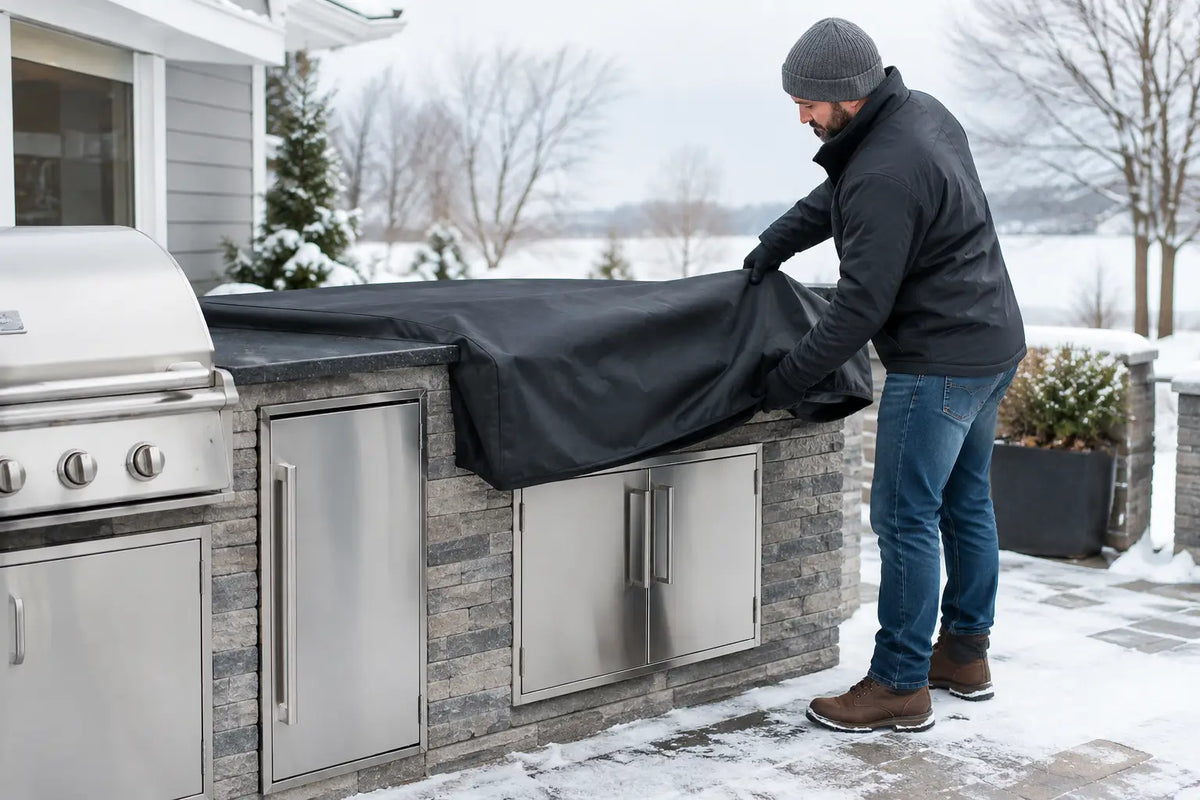
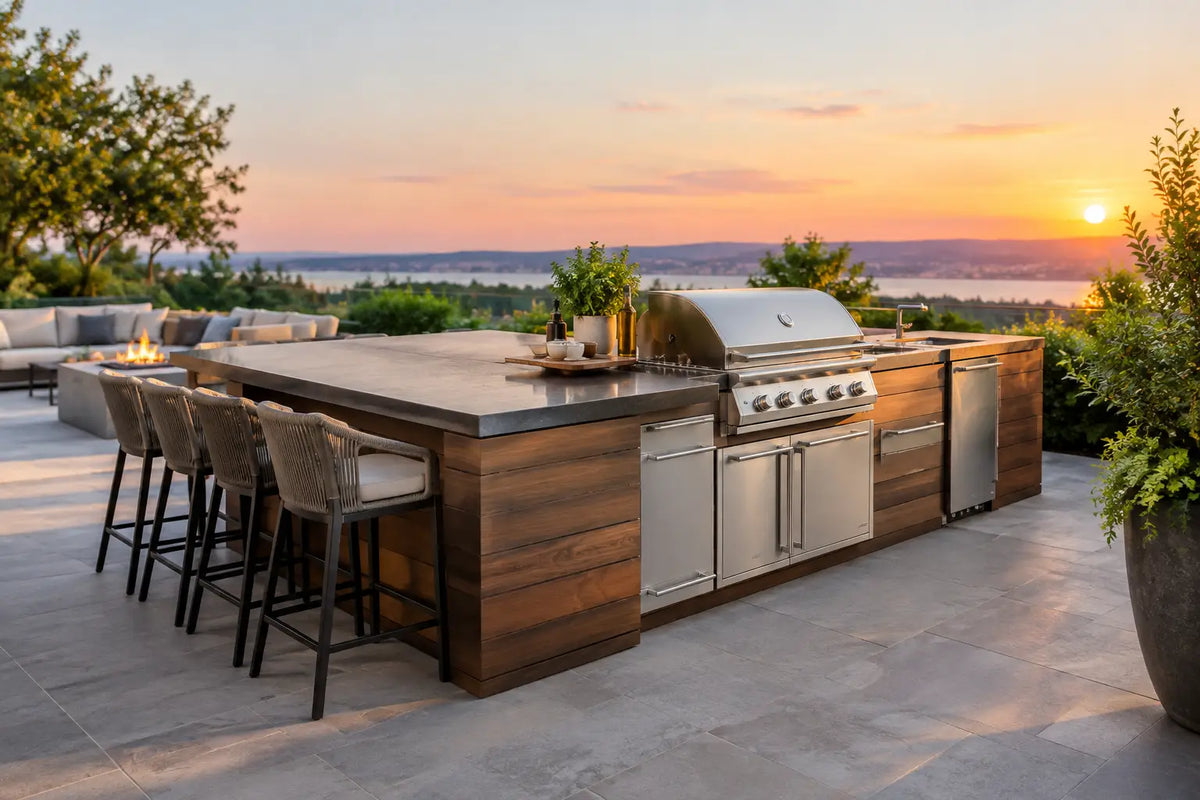
A beautifully finished patio should not become a permanent limitation. Homeowners often ask, can outdoor kitchens move when they renovate, relocate, sell a property, or simply redesign the way they entertain outside? The answer is yes, but only when the kitchen has been designed for relocation from the beginning. A traditional masonry installation and a premium modular system may look equally refined on day one, yet they offer very different freedom when plans change.
For homeowners, architects, and hospitality buyers, that distinction matters. Outdoor living spaces evolve. A pool is added, a terrace is extended, a vacation property is upgraded, or a favorite kitchen needs to follow its owner to a new home. The right outdoor kitchen can protect both the experience you enjoy now and the investment you may wish to preserve later.
Can Outdoor Kitchens Move? It Depends on the Build
Not every outdoor kitchen is movable in the same sense. A brick, stone, or poured-concrete kitchen is effectively part of the property. Removing it usually means demolition, repairs to the surrounding hardscape, and reinstallation work that can cost nearly as much as a new build. Even cabinets that appear freestanding may be tied into foundations, countertops, gas lines, electrical circuits, plumbing, or roof structures.
A modular outdoor kitchen is different. It is built as a collection of finished, self-contained units that sit together as one architectural composition. Cabinets, grill stations, refrigeration modules, storage, and sink units can be separated, protected, transported, and installed again in a new location. The kitchen still needs professional handling, particularly where appliances and utilities are involved, but its structure is not sacrificed to the site.
That does not mean every module can be lifted into a truck without preparation. Premium outdoor kitchens are substantial pieces of furniture and equipment, often made with dense weatherproof panels, stone or sintered surfaces, and integrated appliances. Mobility is a design advantage, not a promise of casual DIY transport.
The Four Details That Decide Whether a Kitchen Can Relocate
A kitchen’s ability to move is determined less by its visual style than by what is behind the cabinetry. Before committing to a layout, assess these four elements.
- Construction method: Independent modules are far easier to relocate than site-built frames, masonry islands, or permanently bonded countertops.
- Utility connections: Gas, water, drainage, and electricity must be safely disconnected and recommissioned at the new site by qualified professionals.
- Appliance configuration: A built-in grill, refrigerator, ice maker, or sink may require appliance-specific removal procedures, ventilation clearances, and careful transit protection.
- Access and site conditions: Stairs, narrow side yards, rooftop elevators, gates, slopes, and delicate paving can influence the labor, equipment, and cost involved.
Modular Design Creates Freedom Without Looking Temporary
There is a misconception that a kitchen designed to move must look lightweight, casual, or compromised. That is no longer true. The best modular systems are engineered to create a fully resolved outdoor environment: aligned worktops, integrated appliances, tailored storage, refined finishes, and the visual weight of a custom installation.
The difference is structural intelligence. Instead of building the kitchen into the patio, the kitchen arrives as professionally assembled modules. Once positioned and connected, it presents a polished, intentional composition rather than a collection of separate cabinets. When the time comes to alter the layout or move house, those modules can be released from the site rather than destroyed with it.
This is one reason pre-assembled, plug-and-play systems appeal to design-conscious buyers. They offer the permanence of a luxury outdoor destination without demanding permanent construction. ELEEXA applies this principle to create kitchens that feel built for the architecture while remaining ready for the realities of changing properties and lifestyles.
Moving an Outdoor Kitchen Is Not the Same as Reconfiguring One
Relocation can mean several things. Sometimes the kitchen is moving ten feet to accommodate a new pergola or pool deck. Sometimes it is being reconfigured from a straight run into an L-shaped entertaining zone. And sometimes it is traveling to an entirely new property.
Moving within the same yard is often the most straightforward scenario, provided utility runs can be revised. A modular kitchen can be carefully repositioned, leveled on its new surface, and reconnected. This is particularly valuable when landscaping plans are still developing or when a homeowner wants to improve traffic flow between the house, dining area, and pool.
Reconfiguring may be even easier. If the system uses compatible modules, an end cabinet can become a return, a grill station can shift closer to prep space, or an additional refrigeration module can expand capacity. The result is a kitchen that can grow with the way you host, rather than forcing a complete replacement when your needs change.
A move to a new property requires more planning. The new location must support the kitchen’s dimensions, appliance clearances, utility requirements, and total weight. Measure more than the available patio footprint. Confirm delivery access, turning space, door and gate widths, structural capacity for elevated terraces, and the placement of gas and electrical connections before scheduling transport.
What Happens to Gas, Water, and Power?
Utilities are the part of the project where a premium result depends on professional coordination. Never transport a connected appliance or attempt to cap gas lines without the correct contractor. Depending on the kitchen’s specification, relocation may involve a licensed gas technician, electrician, plumber, appliance installer, and moving team.
Gas connections should be shut off, disconnected, and tested again after installation. Electrical appliances need suitable protected outlets at the new site, with local code requirements considered. A sink module requires both water supply and drainage planning. In some cases, an existing kitchen can move easily, but the new property may need new utility infrastructure before it is ready.
This is not a reason to avoid a movable kitchen. It is a reason to choose a system that makes the cabinetry and appliances accessible. With traditional construction, reaching connections can require opening walls, removing stone, or dismantling a large portion of the installation. Well-designed modular cabinetry allows professionals to work with greater control and less disruption.
Protect the Finish, Not Just the Function
Luxury outdoor kitchens are engineered for weather exposure, but relocation introduces different risks: impact, vibration, scratching, and stress on doors, drawers, countertops, and appliance components. The move should be treated as a specialist furniture and appliance project, not as a standard household move.
Remove loose shelves, accessories, and removable appliance parts where appropriate. Secure drawers and doors, protect corners and finished surfaces, and keep modules upright unless the manufacturer confirms otherwise. Stone, ceramic, and sintered countertops deserve particular attention. Their performance outdoors does not make them invulnerable to poor handling during transport.
Photograph the kitchen, utility connections, and appliance model information before disassembly. This creates a useful reference for reinstallation and helps ensure every component returns to its intended position. If the kitchen includes custom panels or a tailored countertop layout, label modules discreetly so the composition can be recreated precisely.
Is a Movable Outdoor Kitchen Better for Property Value?
It depends on the buyer and the property. A permanent masonry kitchen can be highly attractive when it is perfectly suited to the home and professionally executed. In some markets, it becomes a meaningful architectural feature that buyers expect to remain.
A modular luxury kitchen offers a different kind of value. You can choose to leave it behind as a premium amenity, negotiate it as part of the sale, or take it with you if it is not included in the transaction. That flexibility can be valuable when the kitchen represents a significant investment, especially if it has been configured around a preferred grill, storage needs, and entertaining style.
For vacation homes, rental properties, and hospitality settings, modularity also supports operational flexibility. An outdoor dining area can be refreshed, expanded, or relocated as the guest experience changes. The kitchen remains an asset with options, rather than a fixed construction decision.
The most intelligent outdoor kitchen is not defined only by the day it is installed. Choose a system that looks exceptional in its setting, performs through every season, and gives you the confidence to change course when your property, plans, or standards for outdoor living evolve.