A luxury outdoor kitchen should elevate the way you host, not turn your backyard into a prolonged construction site. When comparing outdoor kitchen modules vs bbq island options, the real decision is not simply modern versus traditional. It is a choice between a controlled, design-led product experience and a site-built project with more moving parts, more trades, and more variables.
Both can create a beautiful place to cook outdoors. The better fit depends on your property, timeline, desired finish, and how much certainty you want before work begins.
What separates outdoor kitchen modules from a BBQ island?
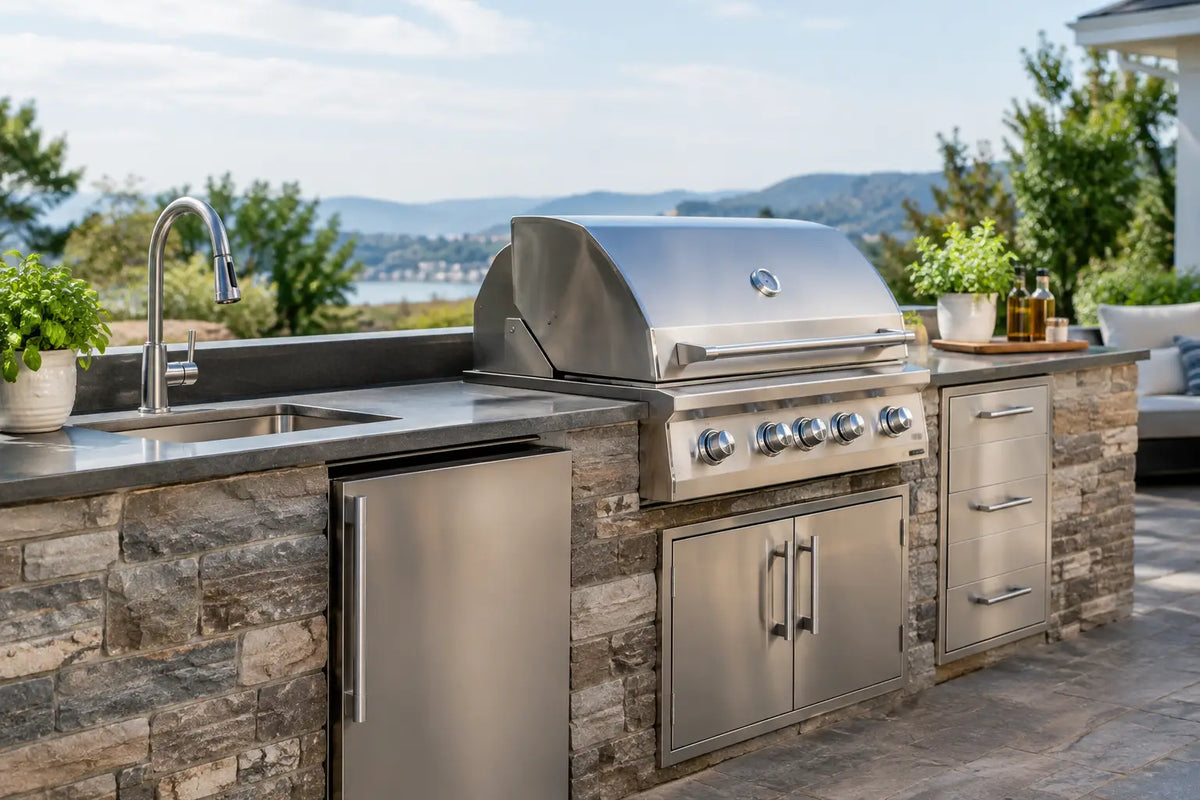
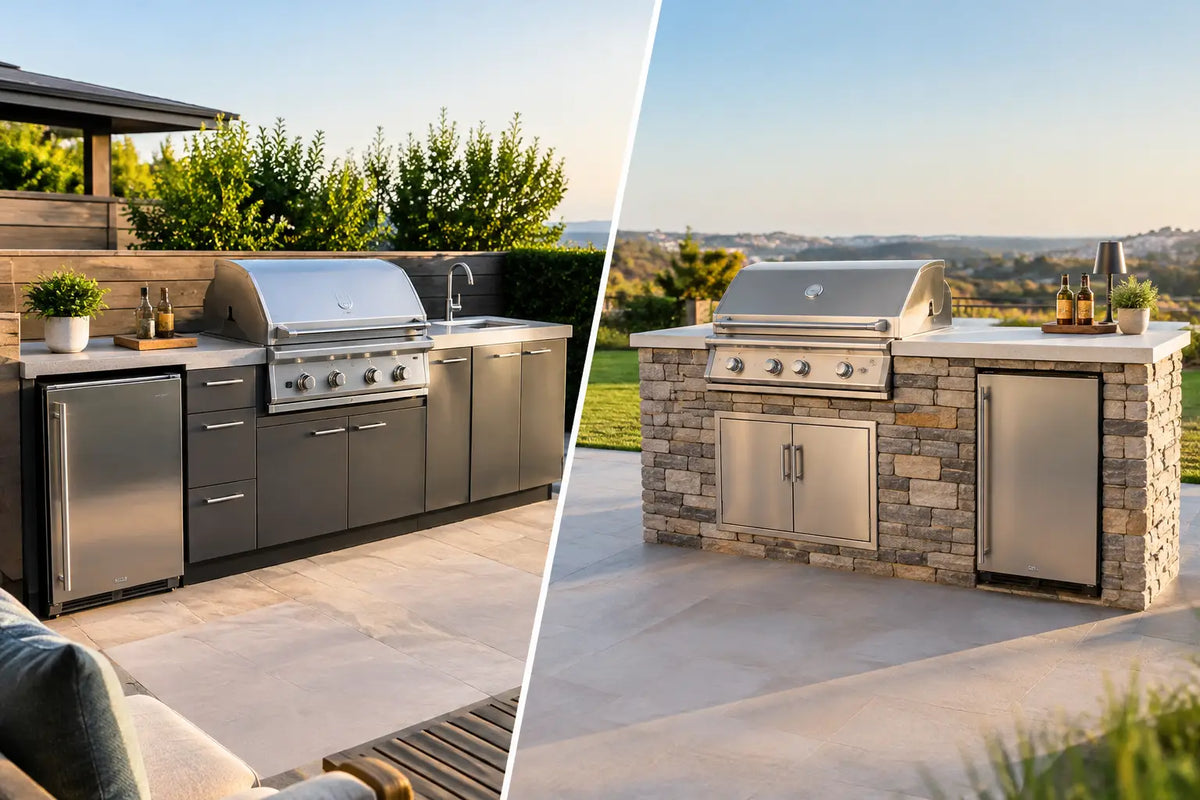
An outdoor kitchen module is a self-contained cabinet or workstation manufactured off-site, usually with dedicated space for a grill, storage, refrigeration, sink, or countertop. Premium modular systems arrive pre-assembled or largely complete, then are positioned, connected, and ready to use with minimal on-site work. Multiple modules can form a linear kitchen, an L-shape, or a more tailored entertaining arrangement.
A BBQ island is generally a permanent, custom-built structure constructed in place. It often uses masonry, concrete block, framing, stucco, stone veneer, tile, or other architectural finishes. The grill, drawers, doors, and appliances are fitted into the structure as the build progresses.
The distinction matters because the construction method shapes almost every part of ownership: lead time, installation, finish consistency, future flexibility, and cost control.
Installation: a finished product or a construction project?
A well-designed BBQ island can look spectacular, especially when it is integrated into a larger landscape, pool house, or architectural renovation. Yet it typically requires sequencing several specialists: a designer, contractor, mason, countertop fabricator, electrician, plumber, gas professional, and sometimes a permit coordinator. Even a straightforward island can become dependent on weather, material availability, site access, and contractor schedules.
Outdoor kitchen modules reduce that burden. The cabinetry, worktops, appliance openings, and storage are engineered as a complete system before delivery. Instead of building the kitchen piece by piece in your backyard, the work is concentrated in a controlled manufacturing environment. On site, the focus shifts to placement and utility connections.
That difference is particularly valuable for completed homes, rooftop terraces, vacation properties, and hospitality settings where disruption carries a real cost. A pre-assembled solution does not eliminate the need for safe gas, electrical, water, drainage, and ventilation planning. It does, however, eliminate much of the mess and uncertainty associated with constructing the kitchen itself outdoors.
When a built-in BBQ island makes sense
A traditional island remains a strong choice when the kitchen must become part of a major architectural build. If you are already rebuilding a terrace, installing an outdoor roof structure, relocating utilities, or creating a stone-clad entertaining zone from the ground up, a site-built island may provide the exact geometry and finish continuity your project requires.
It can also suit highly irregular sites where standard module dimensions cannot be adapted without substantial compromise. The trade-off is that true customization takes time, close supervision, and a reliable contractor team.
When modules have the advantage
Modules are the more compelling choice when you want architectural presence without open-ended construction. They are ideal for homeowners who value speed, precision, and a refined result that is known before delivery. They also make sense where access is restricted, provided the module dimensions and delivery route have been planned carefully.
For many premium properties, this is the decisive benefit: the kitchen can feel bespoke without asking the owner to manage a bespoke build.
Outdoor kitchen modules vs BBQ island: design and customization
There is a common assumption that modular means limited. That may be true of entry-level outdoor cabinets, but it is not true of a premium modular kitchen system. The strongest systems are built around coordinated dimensions, finish families, countertop options, storage configurations, appliance compatibility, and layout planning. The result is not a collection of disconnected units. It is a composed outdoor kitchen.
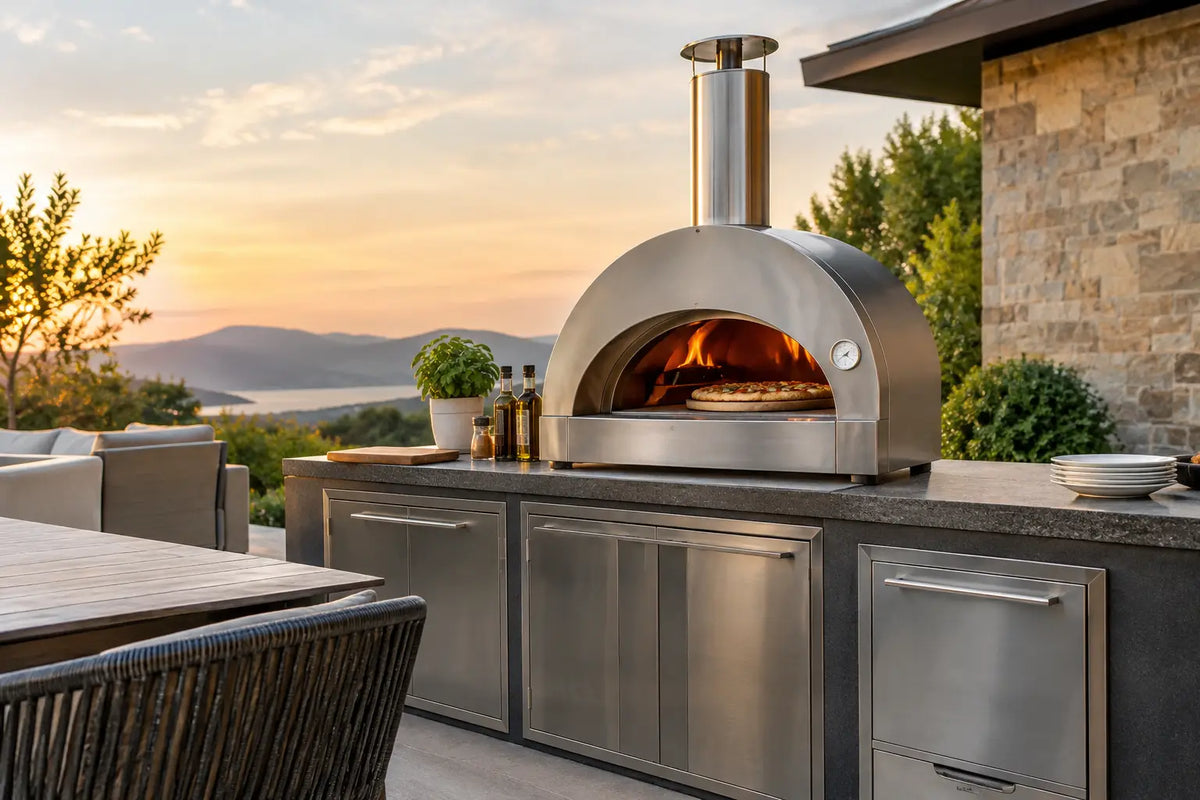
A modular layout gives you the freedom to specify what matters most: a grill station sized for your preferred appliance, generous drawers for tools and tableware, refrigeration for entertaining, a sink module for preparation, or additional counter space for a bar-style service area. With the right range, leading grill formats from brands such as Napoleon, Broil King, and Big Green Egg can be integrated into a polished, cohesive design.
A BBQ island offers near-total freedom in shape and cladding. Curves, oversized dimensions, unusual stonework, and one-off architectural details are easier to achieve when the structure is built from scratch. But more freedom also means more design decisions, more potential for mismatched components, and more opportunity for budget drift.
The strongest choice is not necessarily the one with the most possibilities. It is the one that gives your property the right possibilities, resolved beautifully.
Materials and weather performance are not interchangeable
Outdoor kitchens live with UV exposure, moisture, temperature swings, grease, chlorine-treated pool air, and frequent cleaning. A kitchen that looks impressive on installation day must continue to look composed after multiple seasons outdoors.
With a built-in island, long-term performance depends heavily on the contractor's construction details. Substrate selection, waterproofing, drainage, ventilation, grout, sealants, countertop installation, and appliance cutouts all affect durability. A premium stone finish can still fail prematurely if water finds its way behind it or if the structure lacks proper ventilation.
Modular systems are engineered around repeatable manufacturing standards. Quality materials, corrosion-resistant hardware, weather-resistant cabinetry, and purpose-designed appliance openings can be specified as part of one coordinated product. This creates more consistency from kitchen to kitchen, rather than asking each trade to solve the same outdoor-performance challenges on site.
That does not mean any modular kitchen can be placed anywhere without thought. Coastal exposure, uncovered rooftops, heavy snow regions, and poolside environments deserve a material specification suited to their conditions. The advantage is that these decisions can be addressed early, rather than improvised once construction is underway.
Cost: compare certainty, not just the opening quote
A masonry BBQ island can appear less expensive at the beginning because the estimate may focus on the base structure or a limited set of components. The full cost emerges later: excavation or foundations, utility trenches, framing, finishes, countertops, appliance installation, permits, labor coordination, and changes requested after work begins.
A premium modular kitchen may have a higher apparent product price, but it concentrates much of the cost into a defined, finished solution. You can evaluate the cabinetry, appliances, finishes, configuration, and delivery requirements before committing. That clarity is valuable when the goal is a high-end result without the familiar surprises of custom construction.
Neither format is automatically less expensive. A simple, compact BBQ island built by an exceptional local contractor may be excellent value. A large modular kitchen with integrated refrigeration, luxury surfaces, and multiple appliances is a significant investment. The practical comparison is total installed cost, project duration, and the level of risk you are willing to accept.
Flexibility after installation
Permanent construction is exactly that: permanent. If you later renovate the patio, move house, change the location of a pergola, or need access to utilities behind the kitchen, a built-in island can be difficult and expensive to alter.
Modules offer more flexibility. Depending on the configuration and utility setup, sections can be repositioned, expanded, serviced, or reconfigured more easily than a masonry structure. This is especially useful for evolving properties, seasonal residences, and hospitality venues that refresh their guest experience over time.
Flexibility should not be confused with instability. A premium modular kitchen should feel substantial, integrated, and intentional in its final position. The difference is that it is designed as a product system, not locked forever into a single construction event.
The decision comes down to how you want to build
Choose a BBQ island when your outdoor kitchen is one element of a larger custom construction project and absolute architectural freedom is worth the longer timeline and management demands. Choose modular outdoor kitchen systems when you want luxury design, serious performance, and a cleaner path from specification to first dinner service.
For homeowners and hospitality buyers who expect precision at every stage, ELEEXA brings the strongest parts of both worlds together: architectural styling, premium appliance integration, and pre-assembled modules designed to arrive ready for the space they were made to transform.
Before selecting either route, map your entertaining habits as carefully as your dimensions. The best outdoor kitchen is not the largest one or the most complex one. It is the one that makes hosting feel effortless from the moment the first guest arrives.