
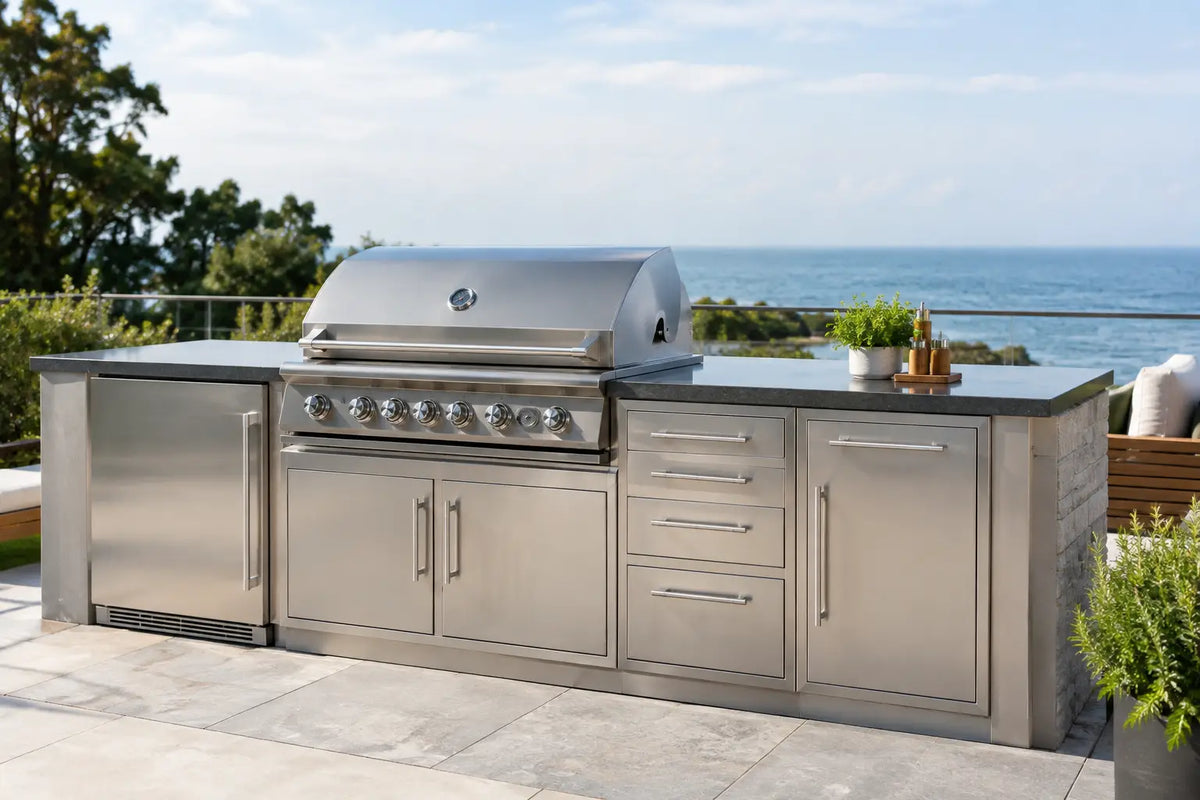
A grill on a patio is useful. A properly designed outdoor kitchen becomes the setting for long lunches, late dinners, and effortless entertaining. This outdoor grill cabinet systems review focuses on the difference between an attractive cabinet around a grill and a complete, lasting solution worthy of a premium home, rooftop, resort, or hospitality terrace.
The strongest systems do more than conceal a grill. They bring storage, work surfaces, ventilation, weather resistance, and visual order into one composed architectural statement. The right choice depends on your climate, cooking habits, site conditions, preferred grill brand, and how much installation disruption you are prepared to accept.
What Defines a Premium Grill Cabinet System?
Outdoor grill cabinet systems range from basic stainless-steel carts to fully integrated kitchen runs with refrigeration, sinks, side burners, drawers, and custom countertops. A premium system earns its place through engineering as much as appearance. Doors must stay aligned, drawers must operate smoothly, surfaces must tolerate heat and weather, and the grill enclosure must be correctly ventilated.
The most compelling systems also treat proportions seriously. Cabinet depths should support real food preparation, countertop heights should feel natural when cooking, and appliance spacing should allow lids, doors, and drawers to open without compromise. These details are easy to overlook in a product listing and impossible to ignore after installation.
There are two broad approaches. Traditional built-in kitchens are constructed on site, often through a combination of masonry, framing, cladding, countertop fabrication, and appliance installation. Modular cabinet systems arrive as finished sections that are configured to fit the space, then positioned and connected. Both can look exceptional. The practical difference is predictability.
A site-built kitchen offers near-limitless freedom when the project is genuinely architectural and the construction team is proven. It can also involve multiple trades, longer timelines, variable workmanship, and difficult changes once work begins. Pre-assembled modular systems reduce those variables dramatically. For homeowners who want a refined result without turning the backyard into a construction site for weeks, that distinction matters.
Outdoor Grill Cabinet Systems Review: The Criteria That Count
Material performance beyond the showroom
Stainless steel remains popular because it is clean, contemporary, and easy to maintain. However, not all stainless steel performs the same way outdoors. The steel grade, thickness, finish, hardware quality, and exposure to salt air all affect long-term appearance. In coastal locations, even high-quality metal benefits from regular cleaning to remove salt deposits and airborne contaminants.
Powder-coated aluminum and premium outdoor panels offer a different visual direction. They can introduce richer colors, matte finishes, and a more architectural character while resisting corrosion. The quality of the coating and the cabinet construction beneath it are critical. Thin panels and exposed cut edges can turn an initially impressive kitchen into a maintenance concern.
Countertops deserve equal scrutiny. Sintered stone, porcelain, granite, and engineered outdoor-rated surfaces each have advantages. Sintered materials are especially attractive for their heat, stain, and UV resistance, while natural stone offers distinctive character but may require more care. A beautiful countertop that is not properly supported, sealed, or detailed around appliances is not a luxury feature. It is a future repair.
Grill compatibility and safe integration
A cabinet system should be designed around the grill, not adapted as an afterthought. Each built-in grill has manufacturer-specific cutout dimensions, clearance requirements, ventilation needs, and access requirements for gas connections, grease management, and service. A cabinet that fits the opening but ignores these requirements is not a successful integration.
Buyers should confirm compatibility before selecting finishes or accessories. This is particularly relevant for high-performance brands such as Napoleon, Broil King, and Big Green Egg, where appliance formats and installation needs differ significantly. A ceramic cooker requires a different support and access solution than a gas grill. A grill with a rear lid hinge may need more clearance than the dimensions of the cutout suggest.
For gas grills, verify whether the system supports a concealed propane cylinder, direct natural gas connection, or both. Proper ventilation is essential, especially where propane is stored. Electrical planning matters, too. Refrigeration, lighting, ignition systems, and outlets should be considered early rather than added through visible extension cords later.
Storage that works during a real cookout
Storage is where many outdoor kitchens reveal whether they were designed by people who cook. One shallow drawer and a single door may look tidy, but it will not organize platters, grilling tools, cleaning supplies, spices, fuel accessories, or serving pieces.
Look for a balanced mix of deep drawers, enclosed cabinet storage, pull-out waste solutions, and accessible zones around the grill. Drawers near the cooking surface are ideal for tools and seasonings. A separate prep area prevents the counter from becoming crowded when guests arrive. If you entertain regularly, refrigeration and an ice or beverage zone can keep traffic away from the grill itself.
The cabinet interiors should also be easy to clean. Fully enclosed boxes protect contents from dust and insects better than open-framed designs, while quality seals, hinges, and drawer runners preserve the feeling of precision over time.
The Installation Question: Custom Build or Plug-and-Play?
Installation is often the deciding factor, even for buyers focused primarily on design. A custom masonry kitchen can be the right answer for a major renovation, unusual site geometry, or a fully bespoke architectural concept. It demands coordination: foundation or base work, utilities, framing, cladding, countertops, appliance fitting, and final adjustments.
A pre-assembled modular system changes the experience. The cabinetry arrives finished, allowing the project to move from delivery to a functional outdoor kitchen with far less on-site labor. Site preparation, utility connections, and leveling still require professional attention, but the cabinetry itself is no longer a construction project.
This model is particularly valuable for rooftop terraces, vacation homes, hospitality properties, and projects with tight access or restricted work windows. It also gives buyers greater confidence in the final appearance because the doors, panels, countertops, and appliance cutouts are manufactured as a coordinated system rather than assembled through several independent trades.
ELEEXA exemplifies this premium plug-and-play direction with pre-assembled modular kitchens built to integrate leading grill ecosystems while eliminating the usual assembly burden.
Design Should Serve the Property, Not Compete With It
An outdoor kitchen should feel intentional from inside the home as well as from the terrace. Consider sightlines through glass doors, the color of exterior cladding, furniture scale, and whether the kitchen should be a focal point or blend into the architecture.
Linear layouts suit many patios because they keep the footprint disciplined and work well against a wall or boundary. An L-shape creates a stronger cooking and preparation zone, while an island can become the social center of a larger terrace. The right layout is not necessarily the largest one. A compact kitchen with generous prep space and clear circulation will outperform an oversized arrangement that interrupts the view or blocks access.
For hospitality settings, durability and workflow deserve priority alongside visual impact. Staff need intuitive storage, easy-clean surfaces, and appliance access. Guests notice the polish of the environment, but operators live with its performance every day.
Where Buyers Commonly Compromise Too Soon
Price comparisons can be misleading when one quote includes finished cabinets, engineered appliance integration, countertops, delivery, and hardware while another covers only basic boxes. Evaluate the complete installed outcome, including site work, utility connections, delivery access, and the time required to finish the project.
The other common compromise is choosing a system solely by color or a staged lifestyle image. Ask practical questions: Can it stand level on the intended surface? Is it rated for the local climate? Can the grill be serviced without dismantling cabinetry? Are replacement components available? Is the warranty clear about outdoor exposure?
Luxury outdoor living is not created by adding more accessories. It is created when every component feels considered, from the way a drawer closes to the way the kitchen holds its presence through heat, rain, and years of use. Choose the cabinet system that makes cooking outside feel less like managing equipment and more like hosting with confidence.

