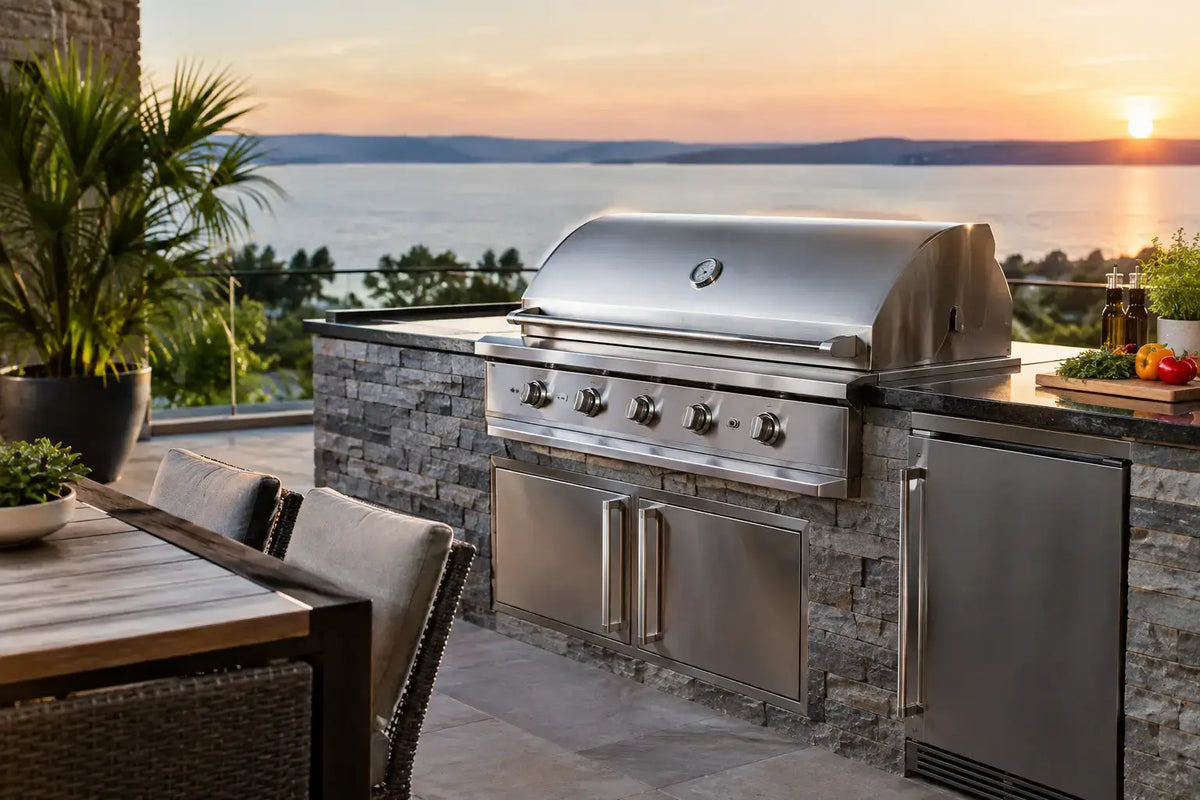
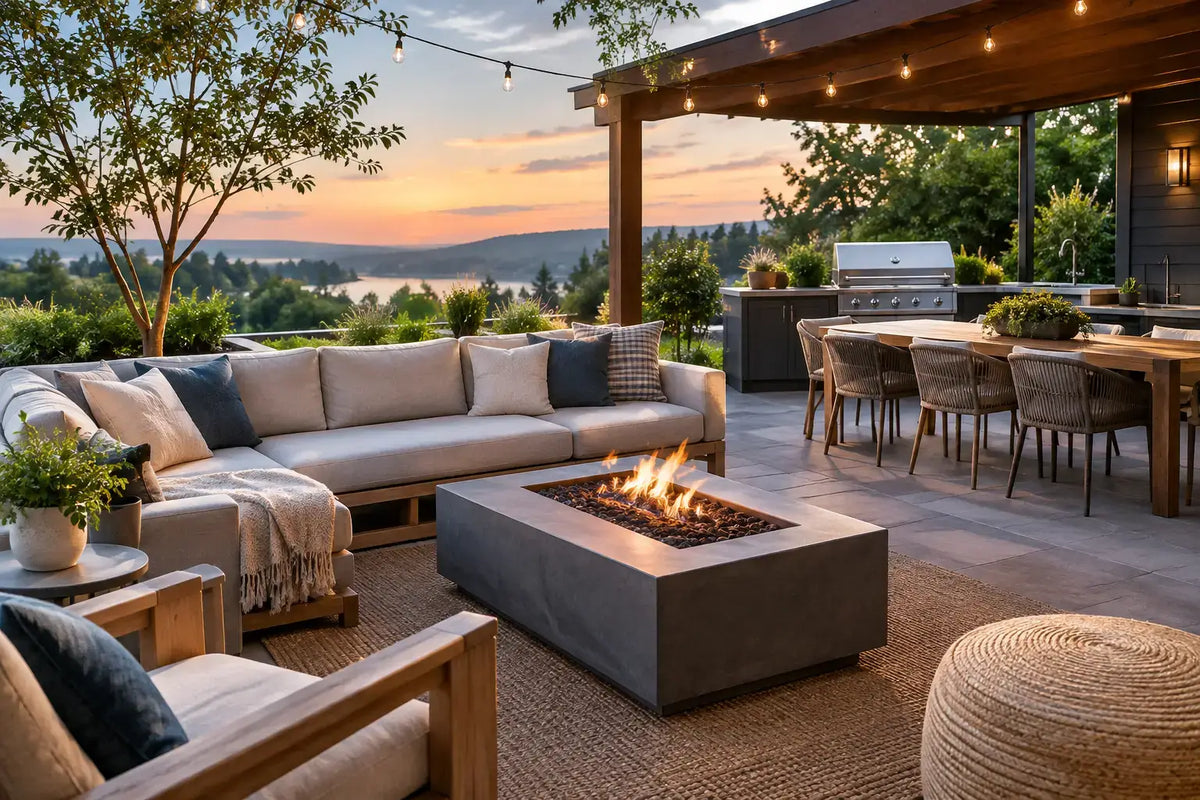
A remarkable terrace does not begin with furniture. It begins with a clear decision about how people will move, cook, gather, and stay long after dinner is served. The best outdoor entertaining space ideas turn an attractive backyard or rooftop into a destination with purpose - one that feels as composed as the interior of the home, yet is built to perform outdoors.
For design-conscious homeowners, the goal is not to fill a patio with standalone pieces. It is to create an outdoor environment that hosts effortlessly, protects its investment, and looks exceptional from every viewpoint. Here are 12 ways to build that experience.
Outdoor Entertaining Space Ideas Start With Zones
1. Plan the space around the host, not just the guests
Every successful outdoor setting has a working center. In most homes, that is the cooking zone, where the host prepares food, pours drinks, and remains part of the conversation. Position the outdoor kitchen so it faces the gathering rather than turning the cook toward a wall or away from guests.
This is where a pre-assembled modular kitchen earns its place. It gives the space a permanent architectural anchor without the disruption of a lengthy masonry build. Keep a practical prep surface beside the grill, include closed storage for tools and tableware, and make sure the path from indoor kitchen to outdoor kitchen is short and unobstructed.
2. Separate heat, dining, and lounging
One large patio can feel surprisingly awkward when every activity competes for the same square footage. Create distinct zones for cooking, dining, and relaxing, even if those zones are only defined by a change in flooring direction, lighting, or furniture placement.
The cooking area needs durable surfaces and comfortable clearance around hot equipment. The dining zone benefits from proximity to the kitchen but should sit beyond smoke and foot traffic. A lounge area belongs slightly farther away, where conversation can continue without guests feeling as though they are seated in the work zone.
3. Treat the outdoor kitchen as real architecture
A grill on a cart is functional. A fully integrated outdoor kitchen changes the perceived value of the entire property. Select cabinetry, countertops, and appliance proportions that relate to the home’s exterior materials, whether that means dark aluminum beside contemporary stone, warm wood tones near a coastal facade, or a crisp neutral palette for a modern rooftop.
Premium modular systems offer a more controlled path than site-built alternatives. ELEEXA modules arrive pre-assembled, allowing homeowners and designers to achieve a tailored, substantial look while avoiding much of the uncertainty associated with coordinating multiple trades on site.
12 Design Decisions That Make Hosting Easier
4. Choose a grill ecosystem before choosing cabinetry
The grill is usually the highest-performance appliance in the space, so its requirements should guide the layout. Confirm the exact model, ventilation requirements, fuel source, lid clearance, and service access before finalizing cabinetry. This matters whether the centerpiece is a gas grill, charcoal cooker, ceramic grill, or a combination of appliances.
Compatibility with leading brands is more than a convenience. A properly integrated appliance looks intentional, operates safely, and avoids the improvised gaps that can diminish an otherwise refined installation.
5. Give guests a place to gather at the counter
A bar-height counter or island overhang transforms cooking into a social event. It gives guests a natural place to stand with a drink, children a place to sit while food is prepared, and the host a direct connection to the group.
Do not overbuild it. For intimate dinners, two to four stools may be all that is needed. Larger families and hospitality settings can justify a longer counter, but circulation remains the priority. Guests should never have to squeeze behind the person using the grill.
6. Build for shade without closing off the sky
Sun is welcome until it makes lunch uncomfortable or overheats the cooking area. The right shade structure extends the usable hours of the space while preserving its openness. A pergola, louvered roof, cantilever umbrella, or architectural canopy can each work well, depending on the property and climate.
A fixed structure feels more permanent and can support integrated lighting or heaters. A retractable option offers flexibility on compact terraces where daylight is valuable. The strongest choice is the one that protects the dining and lounge zones at the times you are most likely to entertain.
7. Layer lighting for dinner, not just visibility
One bright floodlight makes an outdoor area usable, but it does not make it inviting. Use task lighting at the grill and prep surface, soft ambient lighting under counters or along pathways, and decorative fixtures over the dining table or lounge area.
Warm light generally creates the most polished atmosphere. Put separate lighting layers on independent controls so the kitchen can remain bright enough for cooking while the rest of the setting shifts into a more relaxed evening mood.
8. Add one element that changes the season
In many regions, the difference between a summer patio and a year-round entertaining space is a single comfort feature. It may be an outdoor-rated heater, a fire table, a fireplace, or wind screening. Each has a different character and practical trade-off.
Fire features create visual drama and encourage lingering, but they demand thoughtful siting and safety clearance. Heaters are less theatrical but often more effective for dining. Wind screens can be invaluable on exposed roof decks or coastal properties, where a beautiful layout otherwise goes unused on breezy evenings.
9. Make storage invisible and generous
Outdoor hosting becomes less enjoyable when every utensil, cushion, and serving tray has to travel from indoors. Weather-resistant storage keeps the space ready for spontaneous use and protects visual calm.
Prioritize deep drawers near the grill for tools, closed cabinets for cleaning supplies, and dedicated storage for outdoor dinnerware. If you use a beverage fridge, allow room nearby for glassware and a waste solution. A premium space should not require a scavenger hunt for essentials.
10. Create a beverage station away from the grill
Drinks create the most frequent traffic during a gathering. Positioning a refrigerator, ice storage, sink, or serving counter just outside the main cooking line lets guests help themselves without crowding the chef.
For a compact outdoor kitchen, this can be as simple as a refrigerator placed at the end of the run. On a larger terrace, a separate bar module can become a destination of its own. The choice depends on how often you host and whether your gatherings are centered on meals or longer cocktail-style evenings.
11. Use materials that welcome weather
Luxury outdoors is not delicate. Cabinetry and countertops should be chosen for UV exposure, rain, heat, temperature changes, and easy cleaning. Materials that look flawless on installation day but demand constant protection quickly become a burden.
This is also where climate should influence design. Dark surfaces can be striking but may become uncomfortably hot in direct sun. Highly textured surfaces can hide marks but may hold debris. The ideal finish balances visual impact with the way the property is actually used.
12. Leave room for the evening to evolve
The most memorable gatherings rarely follow a strict plan. Lunch becomes an afternoon by the pool. Dinner turns into drinks around a fire. Design for that shift with movable lounge chairs, occasional tables, and enough open floor area for guests to circulate naturally.
Avoid filling every corner. Negative space gives an outdoor room its sense of confidence and makes even a modest footprint feel more expensive. It also gives hosts flexibility for seasonal décor, additional seating, or larger events.
The Best Outdoor Entertaining Space Ideas Feel Effortless
A high-end outdoor entertaining space should never look like a collection of purchases. It should feel resolved: the grill is exactly where it belongs, storage disappears behind clean lines, guests know where to gather, and the setting remains comfortable after sunset.
Start with the routines you want to enjoy most, then choose the architecture, appliances, materials, and comfort features that support them. When every element has a purpose, entertaining outdoors becomes less of an occasion to organize and more of a pleasure waiting just beyond the door.